Most people learn to use AI by trial and error, and a lot of them do it with whatever free tool they found first. That works, up to a point. A little structured learning will get you better results, faster, and help you avoid the mistakes that cause real harm,… Continue Reading How to learn AI skills: a free, self-paced guide for office workers
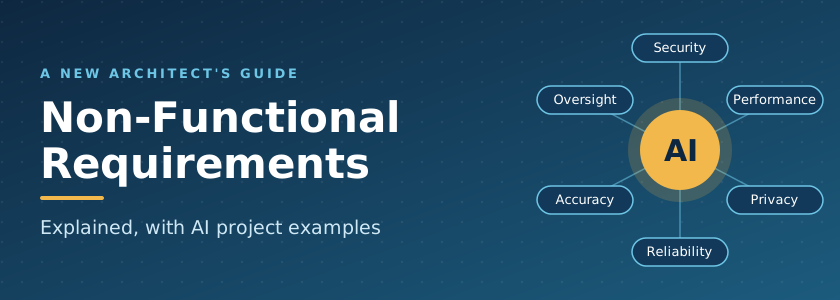
When a business asks for an AI solution, the request almost always describes what it should do. Summarise our emails. Draft our reports. Answer staff questions about policy. What it rarely says is how well, how quickly, how safely and at what cost. That second half has a name: non-functional… Continue Reading Non-functional requirements explained: a new architect’s guide, with an AI project example

Even with the gradual increase in cybersecurity literacy amongst the masses, there are still some myths that people follow religiously, even Cybersecurity professionals. I will set out to bust some of those myths here. Many of the myths have come from companies advertising products as a “silver bullet” solution, some… Continue Reading Cybersecurity Myths – my password use does not matter

Even with the gradual increase in cybersecurity literacy amongst the masses, there are still some myths that people follow religiously, even Cybersecurity professionals. I will set out to bust some of those myths here. Many of the myths have come from companies advertising products as a “silver bullet” solution, some… Continue Reading Cybersecurity Myths – phones are safe

Creation of good policies and procedures is an art that can be helped with some core advice. Policies are the backbone of how a business tells their employees how to act and react, and ensures consistency and productivity. A great company culture, a consistent vision and values, and compliance with… Continue Reading Creating good policies and procedures

Cybersecurity is more than just firewalls and anti-virus, goes further than just zero-trust approaches and cultural changes, and is beyond just policy and compliance. Cybersecurity is not an ‘action’ or a ‘solution’ – it is an ongoing activity that needs constant review and updating. Cybersecurity Planning will vary for each… Continue Reading Cybersecurity planning

What is your strategy for patching and updates? Whilst it might be tempting to just leave your systems on auto-update, the alternative to manually delay updates to always be one behind the latest (also known as an N-1 update strategy), may also be a problem. Updates and patching of software… Continue Reading N-1 update strategy

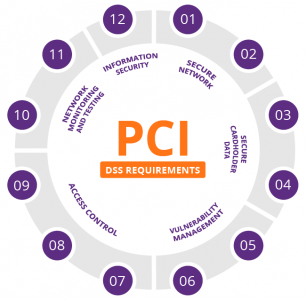
Last month, I wrote an article on the Essential 8. The article pointed out that for most of the measures, they should be the absolute minimum measures that organisations take with their systems. For those who work in the area of security, most of the Essential 8 are common-sense and… Continue Reading Obvious PCI-DSS benefits

In times where you need to run through your BCP drill, it is important to know and understand the reasons why you need to exercise your Business Continuity Plan drill, and where it fits in with the rest of your Disaster Recovery Plan (DRP or DR Plan). Your BCP Drill… Continue Reading The BCP Drill

Many organisations still have on-premises datacentres or computer rooms, or servers in co-location or hosted datacentres. These systems may have served the company well, but it is often the more complex and least understood systems that are the last to be modernised. Sooner or later there will be a need… Continue Reading Replacing old Infrastructure – a step by step guide

We are frequently given advice on creating complex passwords, never re-using passwords, and setting up two factor authentication, but we need to consider the 2 factor authentication risks – which come about through both technology limitations and with the ever-present security weakpoint of human factors. What is 2FA? Firstly, it… Continue Reading 2 Factor Authentication risks

Through my study of AWS and Azure, I have found that one challenge is in understanding the terminology difference, particularly as my own background is in VMware technologies. So, I have created this little chart that compares the three.Obviously, there is no direct one-to-one mapping of the product offerings, but… Continue Reading Azure Vs. AWS terminology

Microsoft used to have a realy great approach to product naming – think of Windows, Outlook, Word, Exchange, etc. – but recently, their naming imagination has disappeared into a confusing mess of extended terminology, which to make things even harder, Microsoft have been changing frequently. Wouldn’t you like some of… Continue Reading Office 365 terminology clarified

DNS is the fundamental signpost of the Internet. Your ISP or internal IT systems will provide DNS services to allow your computer to resolve names to IP addresses. Even though your DNS services may be enough to meet your needs, there are potential problems that may drive you to want… Continue Reading Alternative DNS resolvers

The concept of “Design for Failure” is often used to describe the approach that assumes that there will be a hardware or system failure somewhere, sometime – and instead of architecting for hardware and server clustering and availability, to design applications so that recovery can be performed quickly. Where the… Continue Reading Design for Failure

Who defines how your business operations are performed? How does your business operate? Is it based on a definition of what is best for your business and customers, or is it because that is the process that came out of a shrink wrapped application? Shrink Wrapped Applications vs. Custom Build… Continue Reading Shrink wrapped applications

VMware are often focussing on the latest and greatest features and capabilities offered by their newest software. Of course, they are always driving forward and the next version’s enhancements and benefits are forefront of their minds – but there are still some people out there who are just starting on… Continue Reading Benefits of VMware – the uneven cluster

You may be one of the many people who ask what is the difference between BCP and DR – that is, what is the difference between a Business Continuity Plan and Disaster Recovery planning? First a little history – back in the pre-computing era, for most businesses, if they suffered… Continue Reading The difference between BCP and DR

You may not know that VMware provides some online courses for free. All you need to do is register for a myLearn account and then you can register for – and complete – various foundation courses. Go to http://mylearn.vmware.com/portals/www/mL.cfm?menu=topfreecourses and you will see an up to date list of the available… Continue Reading Free training courses from VMware!