Every options analysis should start at Option 0: Do Nothing. It is the baseline that every other option is measured against, and it is the option most often left out. This is a bit of a longer article, because I have compiled a lot of my thinking to help with… Continue Reading Options analysis: why Do Nothing is always Option 0

How do you choose which technology to invest in? If you lead a technology team, it is the platform and the vendor. If you write software, it is the language and framework. If you are building a career, it is the vendor training and certifications you will spend your evenings… Continue Reading Which technology to use? It’s a gamble

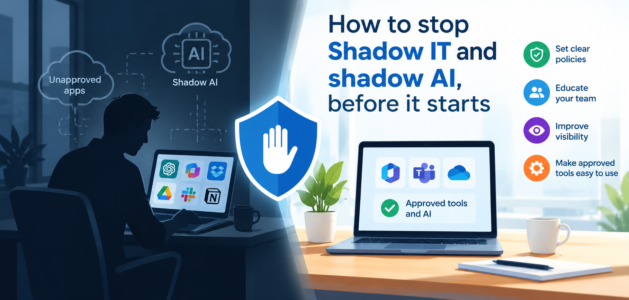
Shadow IT is rarely rebellion. It is a signal that someone has a problem to solve, and the official route did not solve it. I described what Shadow IT is, and what it costs, in Shadow IT / Stealth IT. This article looks at the other side: how to stop… Continue Reading How to stop Shadow IT before it starts

Every legacy system reaches a day when keeping it costs more than changing it. The skill is spotting that day before it arrives, and then choosing the right kind of change. Technical debt behaves like financial debt. A little, well managed, is a sensible trade-off. Left alone, the interest compounds:… Continue Reading Legacy modernisation: retire, retain, replace or evolve

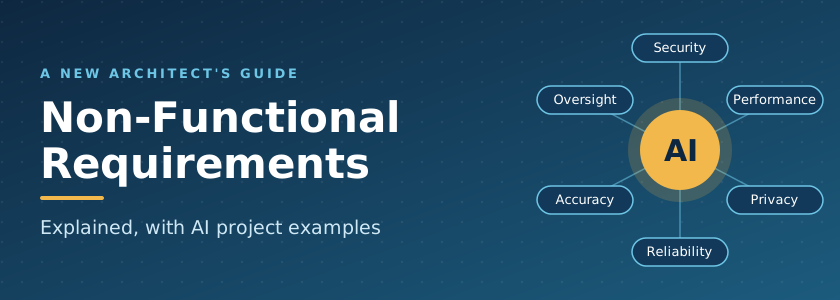
When a business asks for an AI solution, the request almost always describes what it should do. Summarise our emails. Draft our reports. Answer staff questions about policy. What it rarely says is how well, how quickly, how safely and at what cost. That second half has a name: non-functional… Continue Reading Non-functional requirements explained: a new architect’s guide, with an AI project example

If you have ever been in a tricky situation, you will know that half the battle is knowing what is going on – you can’t fix a problem if you don’t know what has happened. However, root cause analysis needs to wait until after the issue is resolved. Too often,… Continue Reading Half the battle is knowing what is going on

Skills evaporation is a blight that affects many businesses, particularly monolithic large businesses and governments. Skills evaporation will happen when good people leave a business to pursue better opportunities, taking knowledge with them – but also the culture of the remaining people is that their skills are reduced by the… Continue Reading Skills evaporation

Strategy is a word that is often over-used so much that it has become poorly defined and understood. You can have a ‘strategy’ to buy your groceries before you buy alcohol … it can be a ‘strategy’ to start a meeting on time… the term has become watered down and… Continue Reading The Hallmarks of a Strategy

Many of us have to give directions; it might be in a project, when managing a team, instructions for someone to pick something up for you from a shop, defining a business strategy – but the way to give directions is important. What is wrong with the way people are… Continue Reading The best way to give directions – destination first

In a 2014 report, Gartner identifies the challenges of the IT organisation in view of the nature of the demands they need to satisfy: provide innovative solutions with agility; provide operational continuity as “business as usual”.  Gartner’s model establishes these as two different types of needs that require two separate… Continue Reading Bimodal IT – Gartner’s view on IT

Who defines how your business operations are performed? How does your business operate? Is it based on a definition of what is best for your business and customers, or is it because that is the process that came out of a shrink wrapped application? Shrink Wrapped Applications vs. Custom Build… Continue Reading Shrink wrapped applications

There are lots of reasons why projects fail, but specifically why IT projects fail – not technology, not budget. You may read in the press about massive IT projects spiraling out of control, costs are double or triple the budget, and technology is being blamed. However, the root cause of… Continue Reading IT projects fail for EVILL reasons

You have probably heard the analogy of trying to guide or coordinate people who have their own agenda or views – that it is like herding cats. It’s often a battle dealing with people who think that they already have the right answer (or those who stick to, and defend,… Continue Reading Herding cats? Use catfood

Running release R minus 1? What about release R plus 45 days? We all know the Patch Tuesday update cycle where Microsoft releases their updates. It is common practice for risk-averse companies to not run the very latest release of software, instead having a policy of running “R-1” – which… Continue Reading R-1 is dead, long live R+45

In my travels as a consultant and adviser, I have come to find that middle management is holding back innovation. Allow me to explain this dramatic assumption. I have found that there are three types of employee – the leader, the worker and the middle-manager. The leaders In industry, government… Continue Reading Middle management – holding back innovation

The focus needs to change. People need to stop fighting today’s problems with yesterday’s answers, and instead, focus on finding solutions to tomorrow’s challenges. I see this time and again from organisations large and small, from both experienced and newly educated people – a focus on the problems that have… Continue Reading Stop fighting today’s problems with yesterday’s answers

I was once in a conversation about capital investment in IT, where the financial manager posited that IT projects can be treated in the same way as an asset – it has an inherent value throughout the lifespan of the system. The belief was that IT CAPEX investments had a… Continue Reading Capital investment in IT – an oxymoron?

I often use the concept of RADIO (Redundant Array of Distributed Independent Objects) in my description of VSAN, as people need extra help in understanding why you don’t need RAID in a VMware Virtual SAN. It’s particularly applicable to storage, but the concept also applies to compute (CPU and RAM),… Continue Reading What is RADIO?

Many of us have to give directions; it might be in a project, when managing a team, instructions for someone to pick something up for you from a shop, defining a business strategy – but the way to give directions is important. What is wrong with the way people are… Continue Reading The only way to give directions